
Trustpilot Negative Reviews: How to Reply and What to Avoid
 by Ikram Ayoub
Replying to a negative Trustpilot review can either reassure prospects or make matters worse. Discover what to say, what to avoid, and when removal is a much more effective strategy than a response.
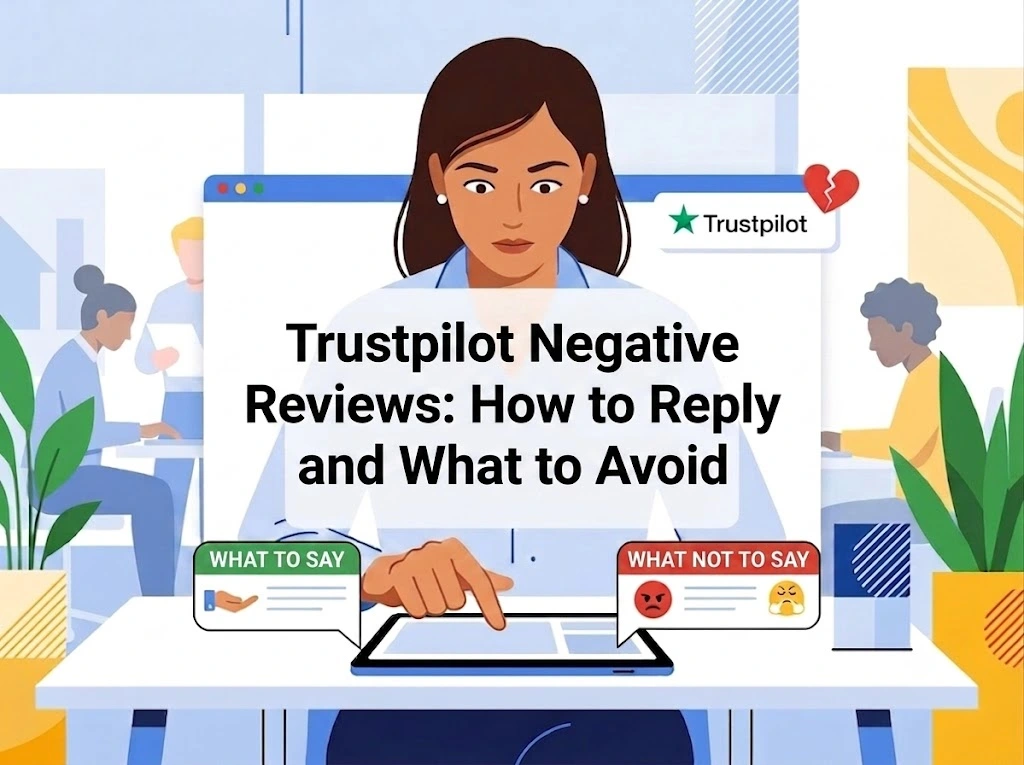
Replying to a Negative Trustpilot Review: What to Say and, More Importantly, What Not to Say
When a negative review appears on your Trustpilot profile, your first reaction is often immediate. You want to reply. You want to defend your business. You want to set the record straight.
This is perfectly understandable. However, in many cases, a bad response can cause more damage than the review itself. Before you write anything, it is crucial to understand that a Trustpilot reply isn’t just for the author of the comment—it is primarily read by your future customers.
What Prospects Are Really Looking For
When a prospect reads a negative review, they are generally looking for three things:
- Your professionalism;
- Your ability to handle a problem;
- Your attitude toward criticism.
The way you respond often influences their perception more than the review itself. An aggressive or emotional response can confirm the doubts raised by the comment. A calm and professional response, on the other hand, can actually build trust.
What You Should Never Say
Certain mistakes happen repeatedly. Avoid these critical pitfalls:
1. Publicly Accusing the Author
Avoid phrases like:
- “You have never been a customer of ours.”
- “This review is completely fake.”
- “We know exactly who you are.”
Even if you are convinced the review is fraudulent, these accusations can make you look defensive or aggressive to outside readers.
2. Replying in Anger
Emotional responses are often the ones that prospects notice the most. For example:
- “Your accusations are ridiculous.”
- “You are lying.”
- “You are simply trying to hurt our business.”
This type of response degrades your image far more quickly than it protects your reputation.
3. Disclosing Personal Information
Some companies attempt to prove their good faith by publishing:
- Order numbers or invoice details;
- Customer database information;
- Private or sensitive transaction details.
This is a major mistake. You could end up creating a legal or privacy problem far larger than the initial negative review.
What You Should Say Instead
A strong response generally follows three simple principles:
- Stay Factual: Focus strictly on verifiable facts.
- Example: "We take this feedback very seriously and want to better understand the situation you experienced."
- Show Your Willingness to Resolve the Issue: Prospects value businesses that look for solutions.
- Example: "Our team remains fully available to look into this matter further with you."
- Maintain a Professional Tone: Even when a review feels entirely unfair, your response must reflect the level of professionalism expected by your future clients. Your goal isn't to win a debate; your goal is to reassure the people who will read this exchange later.
When Replying Is a Good Strategy
Publicly responding is highly relevant when:
- The customer is real;
- The issue is clearly identifiable;
- A practical solution exists;
- No obvious platform violations are present.
In this context, a professional answer demonstrates your commitment to client satisfaction.
When Replying Is Probably Not the Best Solution
Certain situations demand an entirely different approach. For example:
- Obvious fake reviews;
- Highly suspicious accounts;
- Competitors in disguise;
- Defamatory content;
- Leaked personal information;
- Glaring violations of Trustpilot rules.
In these cases, replying publicly can inadvertently validate content that shouldn't even remain online. Many businesses spend weeks replying to reviews that should have simply gone through a removal procedure.
The Question Few Businesses Ask Themselves
Before writing a response, ask yourself a simple question: Is the goal to manage the review, or to make it disappear?
These are two completely different strategies. One seeks to limit the damage. The other seeks to eliminate the source of the problem when it genuinely violates the platform’s guidelines. A well-written response can soothe prospects, but when a review is fake or non-compliant, the real objective should be removal.
Replying isn't always the right strategy. Here is when removal is more effective → Discover how to identify Trustpilot reviews that qualify for removal and the exact procedures that successfully trigger a review by human moderators.
FAQ
Should you always reply to a negative Trustpilot review? No. If the review appears to be fake, defamatory, or contrary to Trustpilot’s guidelines, a formal reporting procedure can be far more effective than a public reply.
How should you respond to a negative Trustpilot review? Stay factual, professional, and solution-oriented. Avoid throwing accusations, reacting emotionally, or disclosing any internal customer information.
What should you never say in a Trustpilot response? Never publicly accuse the author of lying or being a fake reviewer. This type of response often inflicts more damage on your brand than the negative rating itself.
Does replying to a negative review improve your reputation? Yes, provided it is a genuine customer and your answer demonstrates professionalism. Prospects often judge the quality of your response just as much as the content of the review.
Can you delete a review instead of replying to it? Yes, if it violates Trustpilot’s terms of service. Fake reviews, defamatory content, or reviews tied to a conflict of interest can be flagged for permanent removal.