
Consumer Trust Psychology: Why People Buy From Businesses They Trust
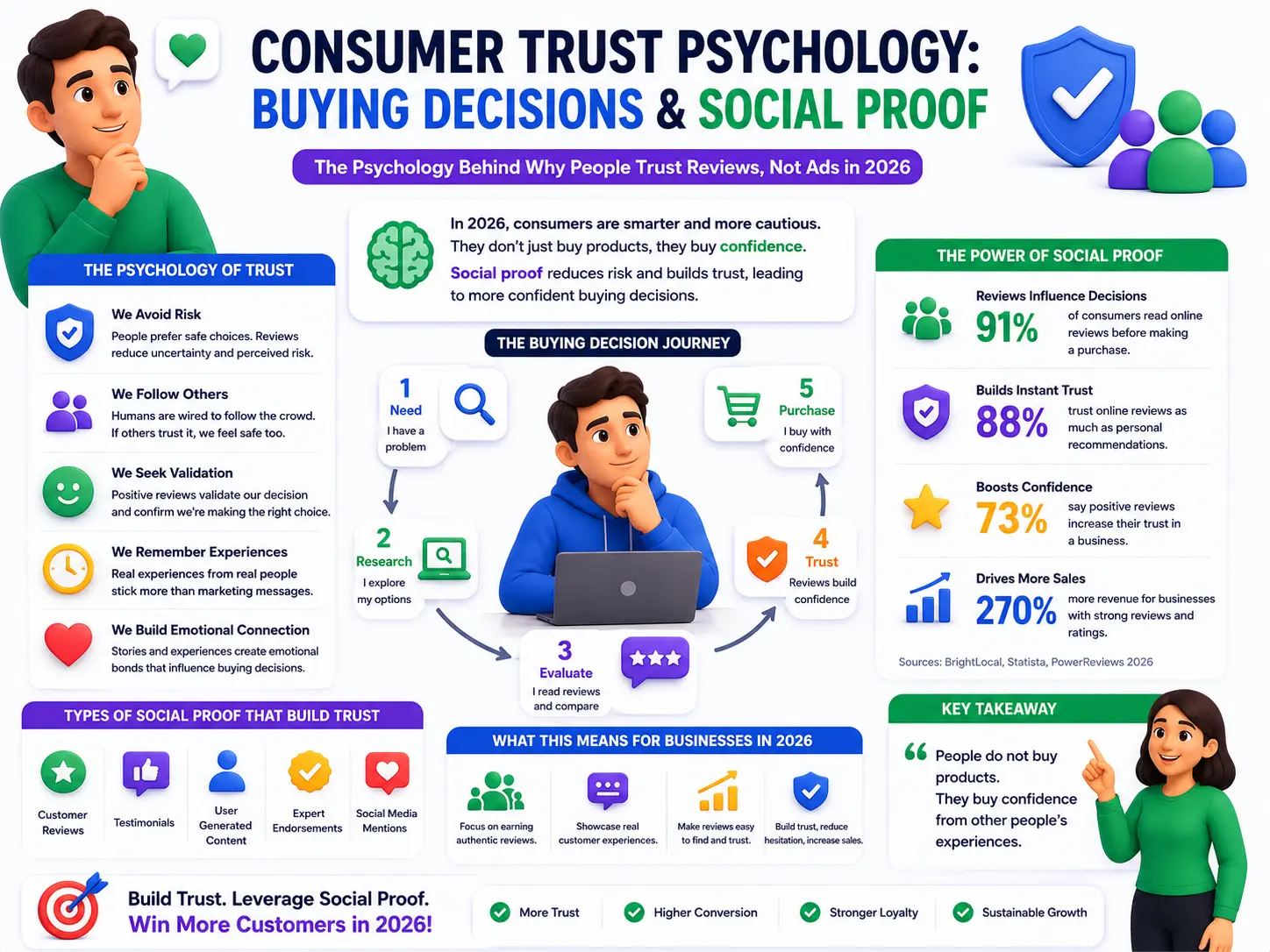
Consumer Trust Psychology Explained: Why People Buy From Businesses They Trust
Consumers rarely make purchasing decisions based on logic alone.
Even when products offer similar features, pricing, and benefits, people tend to choose the business that appears the most credible, reliable, and trustworthy. This behavior is rooted in consumer trust psychology — the study of how confidence, credibility, and perceived safety influence purchasing decisions.
What Is Consumer Trust Psychology?
Consumer trust psychology refers to the mental process consumers use to determine whether a business is credible and trustworthy before making a purchase.
Because customers cannot always verify product quality, service standards, or business integrity in advance, they look for external signals that help reduce uncertainty and increase confidence.
Common trust signals include:
- Customer reviews
- Trustpilot ratings
- Google reviews
- Testimonials
- Industry recognition
- Brand reputation
The stronger these credibility signals appear, the more comfortable consumers feel moving forward with a purchase.
Why Trust Matters in Purchasing Decisions
Modern consumers have access to countless products, services, and businesses online.
As competition increases, trust becomes one of the most influential factors in the customer decision-making process.
Before buying, many consumers ask themselves:
- Is this company legitimate?
- Can I trust this business?
- What do other customers think?
- Is my money safe?
- What happens if something goes wrong?
When uncertainty exists, people naturally seek reassurance before committing.
This is why businesses with stronger reputations often outperform competitors, even when their products, pricing, and overall offer are very similar. It also explains why social proof, customer feedback, online reviews, and brand reputation frequently influence purchasing decisions more than advertising itself.
How Businesses Build Consumer Confidence
One of the most effective ways to build trust is through visible proof of customer satisfaction.
Online reviews have become one of the strongest forms of social validation in the digital marketplace. Many consumers actively search for feedback before making a purchase because they want independent confirmation that a company is reliable.
Positive reviews help create:
- Confidence in the business
- Stronger brand credibility
- Improved customer perception
- Greater purchasing confidence
- Higher conversion potential
Conversely, a lack of reviews or a weak reputation profile can create doubt and cause potential customers to choose a competitor instead.
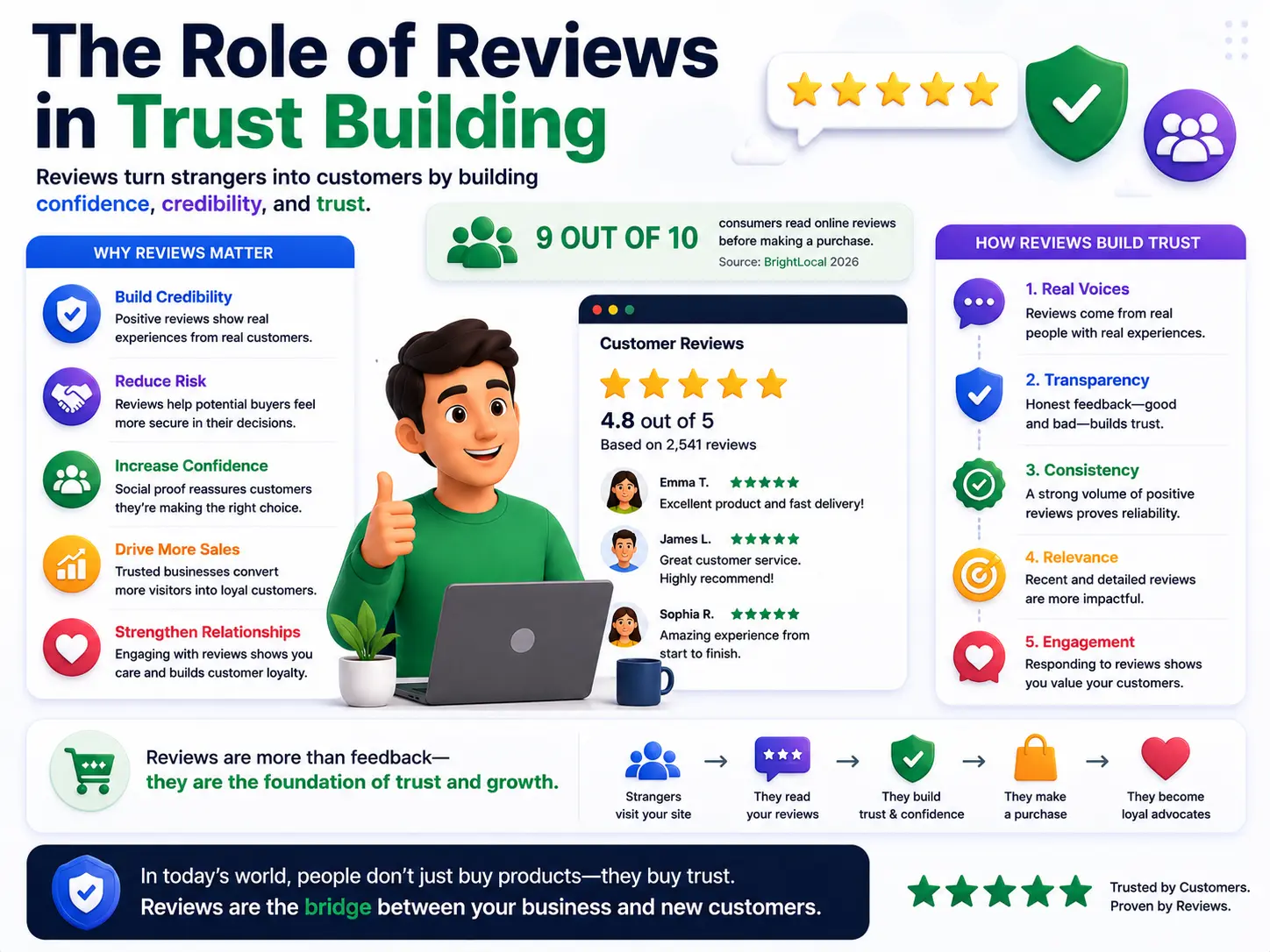
The Role of Reviews in Trust Building
Customer reviews have evolved into one of the most influential trust signals available to businesses today.
Before completing a purchase, many consumers actively search for independent opinions to validate their decision. Positive feedback provides reassurance, while negative reviews—or the absence of reviews altogether—can raise concerns.
This is one reason why businesses with strong review profiles often achieve better conversion rates, stronger customer relationships, and increased long-term loyalty.
Trust platforms such as Trustpilot have become especially important because they provide consumers with transparent insights into real customer experiences.
Why Reputation Management Matters
Trust is not built overnight.
The most successful businesses actively monitor customer feedback, encourage authentic reviews, respond professionally to concerns, and maintain consistent trust signals across multiple platforms.
A proactive approach to reputation management helps strengthen credibility, improve customer perception, and support sustainable business growth.
At AB Media Team, we regularly analyze how online reviews, reputation signals, and consumer trust influence purchasing behavior. Our experience shows that businesses that consistently invest in reputation building are often better positioned to earn customer confidence, improve conversion performance, and strengthen their market position.
Final Thoughts
Consumer trust psychology explains a simple but powerful reality:
People rarely buy from the business with the best marketing. They buy from the business that makes them feel the most confident.
Whether through customer reviews, Trustpilot ratings, testimonials, or other forms of social proof, consumers look for evidence that a company is trustworthy before making a purchasing decision.
For this reason, businesses that actively strengthen their reputation often gain a significant competitive advantage. By building credibility, improving trust signals, and creating positive customer experiences, companies can make it easier for potential customers to choose them over competing alternatives.
In today's digital marketplace, customers do not simply buy products—they buy confidence, credibility, and peace of mind.