
Why Do Businesses Disappear From Google, ChatGPT & Gemini?
 door Ikram Ayoub
A business can be excellent and still be invisible online. The usual cause isn't quality — it's inconsistency: conflicting data across Google, German directories and review platforms that search engines and AI systems like ChatGPT and Gemini can't verify. This guide explains what breaks local visibility and how to systematically restore it.
Why Do Businesses Disappear From Google, ChatGPT & Gemini?
A business can have excellent products, great reviews and years of experience — yet still become difficult for potential customers to find online.
The reason is often not a lack of quality. It is a lack of consistency.
A different phone number on one directory, outdated opening hours on another platform, missing services, unanswered reviews or incomplete business profiles can create conflicting versions of the same company across the web
Search engines and AI systems such as ChatGPT and Gemini rely on available information to understand businesses and decide which companies they can confidently recommend. When that information is incomplete or inconsistent, visibility opportunities can be lost.
Local visibility today is no longer about optimising one profile once. It requires maintaining a consistent digital identity across Google, directories, reviews, websites and AI-driven search environments.
💡 This guide explains why businesses become harder to find, what factors influence local visibility, and how a structured reputation management strategy can help maintain visibility over time.
Why Does Inconsistent Business Data Hurt Google Visibility?
Inconsistent data hurts visibility because it weakens the two local ranking factors a business can actually control: relevance and prominence.
Google has never published its complete local ranking algorithm, but it states that local results are primarily influenced by three factors: relevance, distance and prominence.
🎯 Relevance refers to how well a business matches what someone is searching for.
📍 Distance considers how close the business is to the searcher.
⭐ Prominence reflects how well-known or established a business appears to be, with factors such as links, reviews and broader online visibility contributing to that picture.
Businesses cannot directly control every factor. Distance, for example, depends largely on where the customer is searching from. That makes the signals businesses can influence especially important.
A handful of Google Business Profile elements provide essential context:
- Category — too broad and relevance suffers; wrong, and the business attracts the wrong searches entirely.
- Services — listed specifically ("local SEO, review management") rather than vaguely ("digital marketing") gives Google a real match to search intent.
- Description — written for a person first, without keyword stuffing.
- Photos — an untouched gallery reads as inactive; a current one reads as a real, active business.
- Hours — wrong hours don't just cost a visit. A customer who arrives at a "closed" business that Google said was open rarely comes back.
💡Takeaway: Completeness and accuracy aren't cosmetic — they're the two largest local ranking levers a business fully controls.
Are Businesses Losing Customers Through Outdated Listings?
Yes — because Google isn't the only place customers check, and every outdated listing is a place where a potential customer can be misinformed or lose trust.
Many people also use business directories, review platforms and industry portals before making a decision. These platforms provide additional sources of information that search engines and customers can compare.
For businesses operating in Germany, commonly used platforms include:
- Golocal.de — review-driven, and a partner platformof Das Örtliche, Das Telefonbuch, and Gelbe Seiten, so one listing reaches that wider network too.
- Cylex.de — a structured directory that's a clean, reliable source of NAP data for search engines to cross-reference.
- KennstDuEinen.de —recommendation-based, and tied directly to 11880.com: reviews here show up in short form on the matching 11880 listing.
- ProvenExpert.de — the leadingreputation-aggregation platform in the German-speaking region (over 320,000 businesses use it), pulling reviews from other platforms into one visible star rating.
- 11880.de — a two-decade-old directory with strong domain authority, and one of the few that also serves phone- and mobile-based searches.
The objective is not to accumulate as many listings as possible. It is to maintain accurate and consistent information on relevant platforms.
This includes:
- Business name, Address, Phone number, Website, Service descriptions, Business categories, Opening hours, Photos.
A listing with only a name and phone number provides limited context. A complete and accurate profile gives customers and search systems more information to understand the business. Duplicate or outdated listings can also create confusion when they contradict the current information elsewhere.
💡Takeaway: One accurate, complete listing on relevant platforms is more valuable than a large collection of inconsistent or outdated profiles.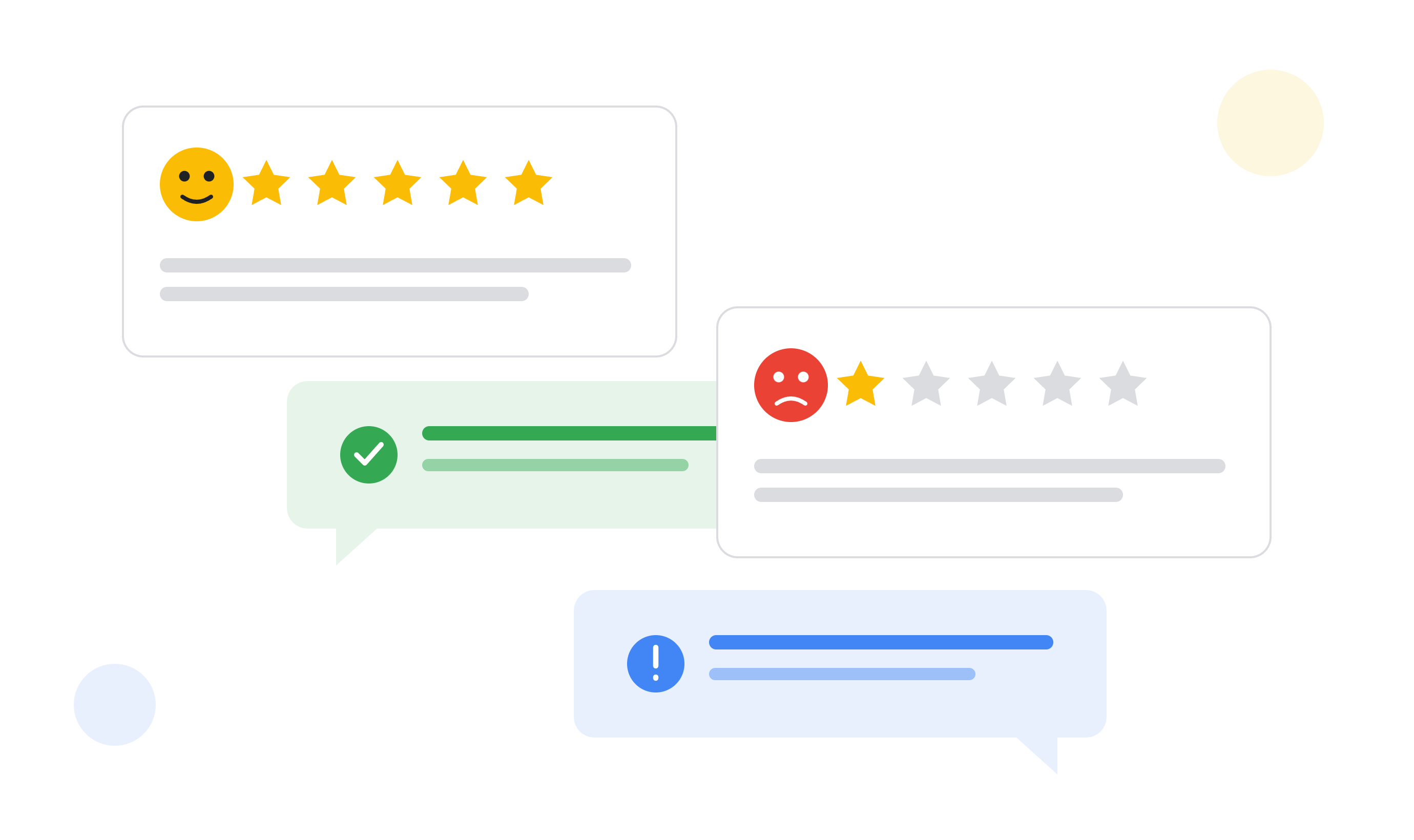
How Do Google Reviews Affect Local Visibility and Trust?
Reviews influence both how prominently a business appears and whether customers trust it enough to make contact — Google itself names review count and quality as factors in local ranking.
But reviews are not just stars next to a business name. They are part of the decision-making process. A business with 4.8 stars from 15 reviews may create a different impression from one with 4.7 stars from 420 reviews, because customers read past the headline number: how recent the reviews are, whether the business responds, and how it handles criticism.
- Positive reviews deserve a specific reply, not a generic "thank you" — it shows the business actually read the feedback.
- Negative reviews deserve a calm, professional response: acknowledge the experience, don't argue publicly, offer to resolve it privately.
- Review velocity matters more than volume alone — a steady flow reads as healthier than a large but stagnant total.
- Review requests should be continuous and sent to every customer, not gated toward only the satisfied ones — gating and incentives both violate Google's policies and put the whole profile at risk.
- Policy-based removal is the only legitimate route for a bad review — it works only when the review demonstrably violates policy (fake content, harassment, spam), never simply because a business dislikes it. No provider can guarantee removal of a policy-compliant review.
💡Takeaway: The review strategy that works is boring by design — steady requests, honest responses, and patience. Shortcuts here are also the ones most likely to backfire.
Why Do Some Businesses Appear in ChatGPT and Gemini While Others Do Not?
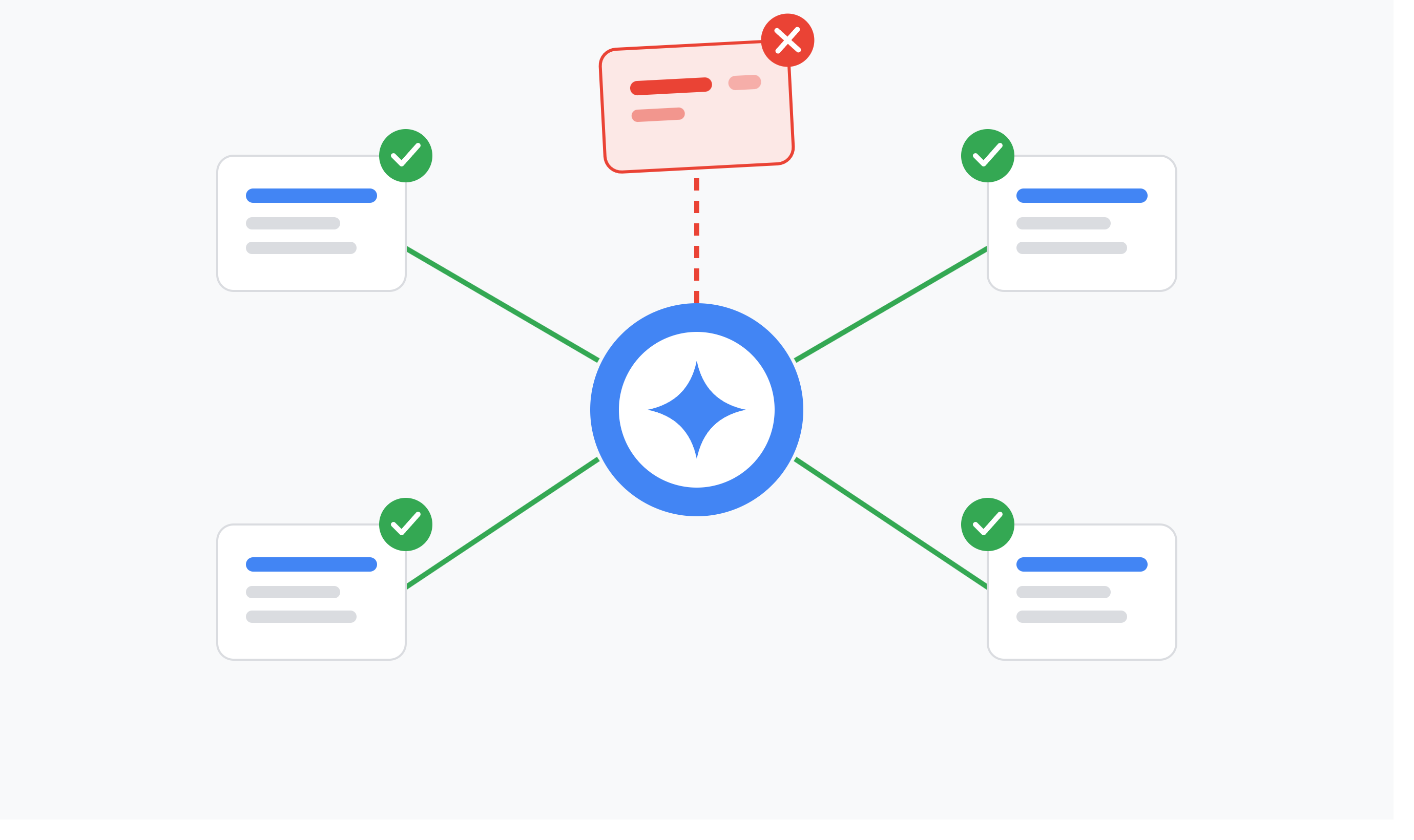
AI systems answering "which local business should I use" questions need to verify that a business is a real, checkable entity before recommending it. They do this the same way search engines do: by checking whether independent sources agree.
A business that shows up consistently across Google, five directories, and its own website gives an AI system multiple points of agreement to work from. A business with conflicting or missing data on half of those sources gives it almost nothing to confirm — so it gets left out of the answer, not ranked lower within it.
What tends to separate the two groups in practice:
- Consistent business information across every platform, not just the primary one
- Clear website content that states what the business does, for whom, and where
- Third-party references (reviews, directories, mentions) an AI can cross-check
- Presence on the directories that already carry authority in the category
💡Takeaway: Being absent from an AI answer usually isn't a ranking problem — it's a verification problem.
🧠 What Is GEO and How Does It Affect AI Search Visibility?
GEO, or Generative Engine Optimisation, is a developing approach to improving how content and business information can be understood and surfaced by AI-powered search and answer systems.
Traditional SEO focuses primarily on helping pages perform in search engines. GEO places additional emphasis on making information easy for generative systems to interpret, verify and potentially reference.
For local businesses, this means clearly communicating:
- What the business does
- Which services it provides
- Who it serves
- Where it operates
- Why it is relevant
Practical GEO improvements for local businesses include:
- Keeping business details identical across Google, directories and your website
- Creating detailed service pages that clearly explain what your company does
- Adding structured data (schema markup) to help machines understand your business
- Building trustworthy online references through reviews, mentions and relevant platforms
- Maintaining fresh content that reflects your current services, locations and expertise
GEO is not a replacement for SEO. Strong technical SEO, useful content and a clear digital presence remain essential foundations.
💡Takeaway: GEO is not about manipulating AI systems. It is about creating a clear, trustworthy digital presence that makes it easier for AI tools to understand your business and recommend it when relevant.
What Technical Issues Can Prevent AI Systems From Finding Your Business?
Beyond content and data, a handful of technical basics decide whether a business can be found at all:
- Crawlability — If a search or retrieval system cannot access a page, the information on that page may not be available to it.
- robots.txt — Your robots.txt file controls crawler access to your website.Businesses should understand which crawlers are allowed or blocked before making changes, because different AI-related crawlers can have different purposes.
- Indexing — A page that is technically accessible but not indexed may have limited visibility in traditional search and may be less likely to be discovered through search-driven systems.
- Structured data — schema markup helps both Google and AI systems parse who a business is and what it offers, faster and more reliably than prose alone.
- Website accessibility — Slow, broken or technically difficult pages can create problems for both users and crawlers.
- Entity consistency — Your business information should be clearly represented on your website itself, not only inside your Google Business Profile.
💡Takeaway: Most of this is a five-minute audit, not a redesign — and it's the audit almost nobody runs until something's already gone wrong.
Why Is Reputation Management More Difficult for Multi-Location Businesses?
One location is manageable by hand: check the profile, answer reviews, ask for feedback. Ten locations multiply every part of that — ten profiles, ten sets of reviews, ten versions of hours and services — while each location still needs to read as itself rather than a copy-pasted duplicate.
- Multiple Google profiles need the same core data aligned, with location-specific detail layered on top.
- Location-specific reviews need individual responses — a templated reply across ten locations reads as exactly that.
- Consistent branding has to coexist with local character, not replace it.
- Localised content (team, services actually offered at that branch) prevents every location from looking identical.
- Review response workflows need clear ownership: who responds, who approves sensitive replies, how fast, and how it's reported.
Without that ownership, reputation management becomes everyone's job — which in practice means no one's.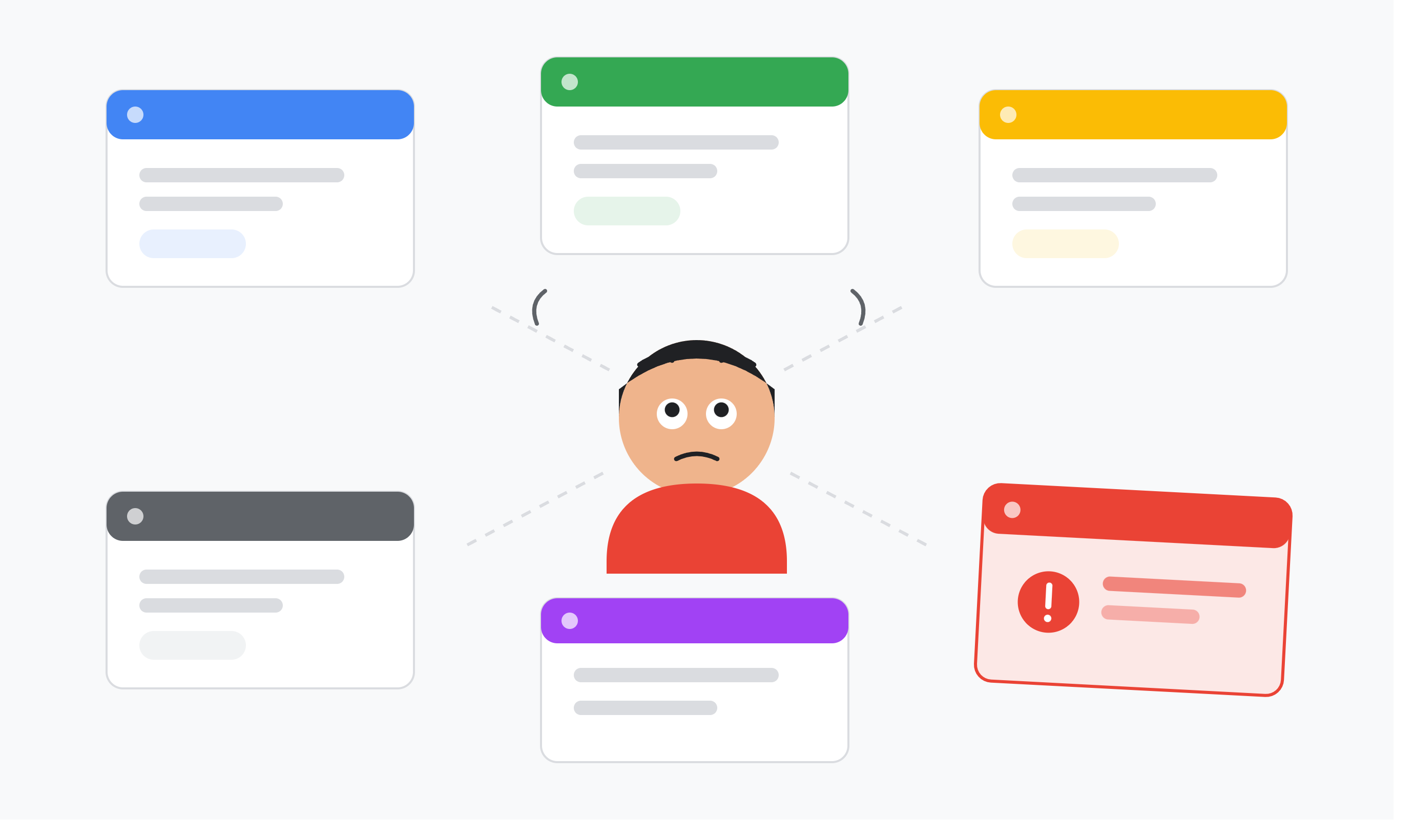
What Happens When Businesses Manage Google Visibility Manually?
Doing this alone costs more than most owners expect — mainly in time, and eventually in money. Every hour spent logging into five directories one by one is an hour not spent on the business itself.
A typical routine looks like this: check Google Business Profile, then Golocal, then Cylex, then KennstDuEinen, ProvenExpert, and 11880 — six dashboards, six sets of rules, the same address and phone number re-entered six slightly different ways.
Without expert handling, this usually surfaces real platform problems an owner isn't equipped to solve alone. Reviews and updates are the easy part. The hard part is what happens when something goes wrong:
- A competitor leaves a damaging, false comment — and it can't simply be deleted. Each platform has its own dispute process, and a request without the right evidence gets rejected.
- A profile comes under a coordinated attack of fake reviews, and proving that to a platform's support team takes documentation, time, and follow-up most owners have never had to do before.
- An update made on Google doesn't carry over to 11880 or KennstDuEinen, because each platform runs its own separate system with no shared sync.
Some businesses manage this well. They understand Google Business Profile updates, check directories on a schedule, and know exactly which dispute process to follow when a review problem appears.
For many business owners, it becomes complicated fast. A false review sits unanswered because the correct dispute process isn't clear. A change made on Google never makes it to the other five platforms. A report gets rejected because the required evidence wasn't included the first time.
Over time, none of this shows up as one clear failure. It shows up as inconsistent information, an unmanaged reputation, and hours spent fighting platform rules instead of running the business.
💡Takeaway: This isn't a knowledge gap most owners are missing by choice — it's a time-and-expertise cost that compounds quietly until it's a visibility problem too.
 ✅ The 12-Month Solution: Turn Visibility Management Into a System
A strong online presence is not created through a one-time optimisation. It requires an ongoing process that keeps business information accurate, profiles complete and reputation actively managed.
A professional visibility strategy should focus on five key areas:
1. Google Business Profile optimisation
Your Google Business Profile should accurately represent your business, including services, categories, opening hours, photos and contact details. Regular updates help ensure customers always see reliable information.
2. Directory and citation consistency
Business information should remain consistent across relevant German directories and platforms. Correcting outdated details, duplicates and missing information creates a clearer digital footprint that customers and search systems can understand.
3. Professional review management
Reviews influence customer trust and reputation. A long-term strategy includes encouraging authentic feedback, responding professionally to customers and reporting only reviews that clearly violate platform policies.
4. AI search visibility
As customers increasingly use AI-powered tools such as ChatGPT and Gemini for recommendations, businesses need clear and consistent information that can be easily understood and verified. Structured business data, relevant content and reliable online references support this process.
5. Continuous monitoring and improvement
Local visibility changes constantly. New reviews appear, services evolve, competitors improve their presence and platforms update their systems. Ongoing monitoring helps identify issues before they become larger visibility problems.
✅ How AB Media Team Helps Businesses Build Long-Term Visibility
AB Media Team's 12-Month Google Visibility & Reputation Management Package combines local SEO, reputation management and AI-focused optimisation into one continuous strategy.
The process begins by analysing your current online presence and identifying inconsistencies across your Google Business Profile, website and relevant German business platforms. Business information, services, contact details, opening hours and visual content are then aligned to create a clearer and more consistent digital identity.
In practice, the package includes:
- Optimisation of your Google Business Profile for three relevant search terms, including up to 30 photos and content optimisation for up to five products or services
- Linking of social media profiles and WhatsApp to your profile
- Creation and optimisation of business profiles on Golocal.de, Cylex.de, KennstDuEinen.de, ProvenExpert.de and 11880.de, with complete company data, services, descriptions, website links and images
- Professional, individual responses to Google reviews, active policy-compliant review requests to real customers, and review of negative feedback for policy violations — with removal requests filed only in justified cases
- GEO optimisation: structuring your business information so AI systems such as ChatGPT and Gemini can understand and reference it, positioned for three search terms
Why 12 Months Instead of a One-Time Optimisation?
A one-time optimisation can solve today's issues, but online visibility changes every month. Over 12 months, businesses benefit from continuous monitoring, regular improvements and proactive management of their digital presence.
The goal is simple: make your business easier to find, easier to understand and easier for customers to trust.
If your business information is inconsistent, reviews are unmanaged or you are unsure how your company appears in search and AI recommendations, the first step is identifying where improvements are needed. AB Media Team helps businesses transform fragmented online information into a structured and continuously managed visibility strategy.
FAQ
What is the single biggest reason businesses lose rankings on Google, ChatGPT, and Gemini at the same time?
Inconsistent NAP (Name, Address, Phone number) data across directories and profiles. When Google's algorithm or an AI retrieval engine encounters conflicting phone numbers, addresses, or opening hours across platforms like Golocal, Cylex, or 11880, its confidence score drops. Lower entity confidence directly translates to reduced visibility in the Google Local Pack and fewer source citations in ChatGPT and Gemini.
How do directories like Golocal, Cylex, KennstDuEinen, ProvenExpert, and 11880 impact AI search visibility?
AI engines (such as Perplexity and ChatGPT) rely on external web citations and structured business directories to verify real-world entities. Directories like Golocal, Cylex, KennstDuEinen, ProvenExpert, and 11880 act as high-authority validation points. When your company's services, categories, descriptions, and media are completely synchronized across all five platforms, AI retrieval systems recognize your business as a trusted, verified recommendation source.
Why did my business disappear from Google Maps?
Usually a data or relevance issue rather than a penalty — an outdated category, missing hours, a directory listing that contradicts the Google profile, or a drop in recent review activity. A NAP consistency check across Google and the directories is the fastest way to find the cause.
Can ChatGPT recommend my business?
It can, if it has enough consistent, verifiable information to work with — a complete Google profile, matching directory listings, and clear website content. A business with fragmented or missing data is far less likely to be cited, regardless of service quality.
What is GEO optimisation?
Generative Engine Optimization: structuring business information and content so AI systems can parse, verify, and cite it directly in a generated answer. It complements traditional SEO rather than replacing it, and its clearest, best-evidenced effect is on systems like ChatGPT and Perplexity rather than Google's own AI Overviews.
Can negative Google reviews be removed?
Only if the review demonstrably violates Google's policies — fake content, harassment, spam, conflicts of interest. A negative but genuine, policy-compliant review can't be removed, and any provider promising guaranteed removal regardless of content should be treated with caution.
How often should a Google Business Profile be updated?
At minimum, monthly — checking hours, photos, and services. Real-time updates matter more around anything that changes suddenly: a holiday closure, a new service, a phone number or address change.
Are German business directories still important?
Yes, for two reasons: they reinforce the NAP consistency Google itself checks, and several of them (KennstDuEinen with 11880, for instance) feed data directly into each other, so one accurate listing improves visibility on a second platform automatically.